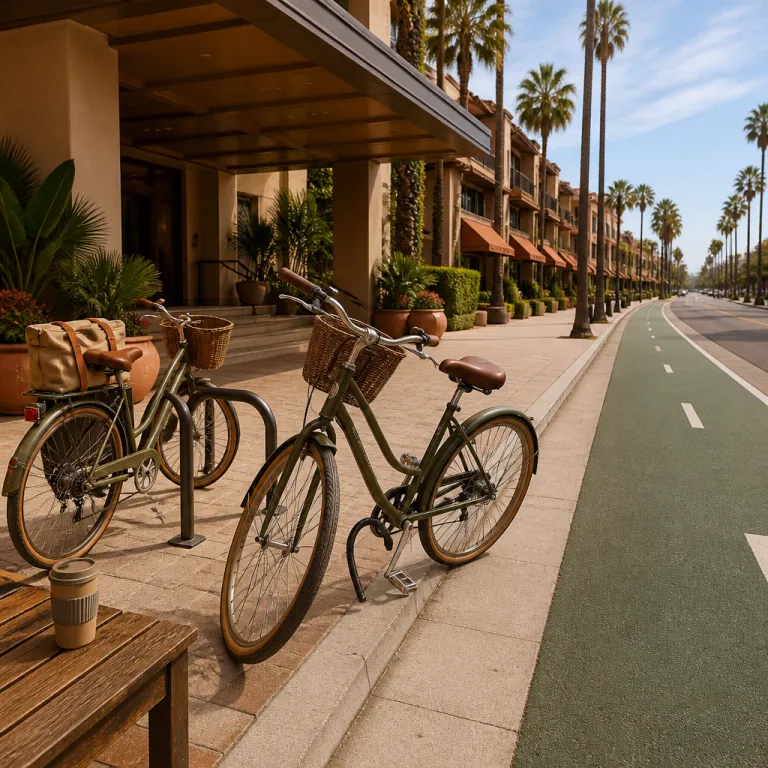
The walkable heart of Beverly Hills for a car free stay
Beverly Hills has a reputation for traffic, valets, and long drives. Yet the compact center of the city makes carefully chosen walkable Beverly Hills hotels a quiet luxury for visitors. Within roughly 1 to 1.5 miles (1.6 to 2.4 km), the Golden Triangle of central Beverly Hills places you between palm lined boulevards, shaded parks, and serious dining.
Most luxury hotels in this part of Beverly Hills sit inside what locals casually call the walkability triangle. From a central address such as The Beverly Hilton, The Peninsula Beverly Hills, or the Waldorf Astoria Beverly Hills, you can reach Rodeo Drive, Canon Drive restaurants, Beverly Cañon Gardens, and Beverly Gardens Park in under 10 to 15 minutes on foot. For many visitors this triangle in the city is where a stay in Beverly Hills finally feels like a real neighborhood rather than a backdrop for Los Angeles traffic.
The Beverly Hills City Council and the Beverly Hills Chamber of Commerce have both leaned into this pedestrian friendly identity. Their sustainable travel messaging highlights that “Is Beverly Hills walkable? Yes, many attractions are within walking distance,” and city materials emphasize walking, transit, and biking as preferred modes. When you book a hotel inside this triangle, you reduce parking stress, cut emissions, and gain time back for the kind of slow travel that Southern California rarely offers.
Think of the area as a flat grid rather than a hilltop enclave. The streets between Wilshire Boulevard and Santa Monica Boulevard are wide, well lit, and lined with trees, which matters when you are walking with children or pushing a stroller. Families who choose hotels in this zone often report that the most memorable part of their stay is the evening walk from dinner back to the hotel, when the city lights soften and the stars above the palms feel closer than the stars on any Walk of Fame in Hollywood.
From a sustainability perspective, this is where centrally located Beverly Hills hotels quietly outperform more isolated properties in Los Angeles. You can structure an entire week without a rental car, relying on walking, short rideshare hops, and the occasional Metro bus for longer trips toward Downtown Los Angeles or Santa Monica. The result is a lower carbon footprint, fewer hours lost to parking garages, and a more intimate sense of how this corner of Los Angeles actually lives.
Choosing the right address: Golden Triangle hotels for walkers
For a car free week, location outranks almost every other amenity when you compare Beverly Hills accommodations. The Golden Triangle, framed by Wilshire Boulevard, Santa Monica Boulevard, and North Crescent Drive, is the sweet spot for visitors who want to stay on foot. Here, the density of hotels, restaurants, and parks turns a few city blocks into a self contained village inside greater Los Angeles.
Look for a hotel that sits within a short walk of both Rodeo Drive and Beverly Gardens Park. Properties near the intersection of Rodeo Drive and Dayton Way, or close to the Beverly Hills City Hall and civic center, give you fast access to shopping, green space, and dining. Families often find that being within 0.3 to 0.5 miles (500 to 800 meters) of the park is the difference between an easy stroller friendly stay and a week that still feels like commuting across Los Angeles.
When you evaluate Beverly Hills hotels online, map the walking radius rather than just checking driving distances in miles. A property might market itself as “minutes from Rodeo Drive” by car, yet sit in areas where sidewalks are patchy or crossings feel hostile with children. By contrast, a smaller address such as a refined stay near Rodeo Drive can be a popular choice for travelers who value being able to walk to dinner, parks, and shops without ever thinking about parking.
Families should also consider how the hotel handles arrivals and departures without a rental car. Some central properties offer house cars for short trips within the city, while others maintain well organized rideshare staging areas that keep traffic away from the main entrance. If you are landing at Los Angeles International Airport (LAX), confirm whether the hotel can coordinate a hybrid or electric transfer, which aligns with a low carbon stay and reduces the stress of navigating Southern California freeways yourself.
Finally, pay attention to how the hotel talks about the neighborhood, not just the property. A team that can recommend a morning route through Beverly Gardens Park, a back street path to Rodeo Drive, or a quiet residential loop for an evening walk usually signals genuine local expertise. Those details matter more for a sustainable, walkable stay than another reference to Hollywood glamour or the Sunset Strip.
Beyond the lobby: walking routes, rideshares, and hotel car services
Once you have checked into one of the central Beverly Hills hotels, the real test is how your days unfold on foot. The good news is that the city center is flat, compact, and designed with wide sidewalks that make walking with children or grandparents realistic. You can move between hotels, parks, and dining in Beverly Hills without ever feeling trapped by traffic.
Start by treating Beverly Gardens Park as your green spine. From most hotels in the Golden Triangle, you can reach the park in under 10 to 12 minutes, then follow its linear path for more than 1.3 miles (about 2 km) past fountains, sculptures, and the famous Beverly Hills sign. This route becomes a natural way to connect the city center with quieter residential streets, giving visitors a sense of how Beverly Hills offers both glamour and everyday life within a short walk.
For trips beyond walking distance, rideshare remains an efficient lower carbon option if you skip a private rental car. Many hotels in the area have designated rideshare pick up points on side streets, which keeps the main entrance calm and reduces idling near the lobby. When you want to reach West Hollywood, Santa Monica, or Downtown Los Angeles for a concert hall evening, a short rideshare hop from your hotel usually beats the cost and stress of parking your own vehicle.
Several luxury properties also operate house car services within a limited radius, often using hybrid sedans or SUVs. These services typically cover short transfers to Rodeo Drive, the Beverly Hills civic center, or nearby dining areas, which can be helpful if you are managing small children or mobility issues. If you plan to attend a performance at Walt Disney Concert Hall or another Disney concert venue in Downtown Los Angeles, ask the concierge whether they can coordinate a combined car service and Metro trip to keep the journey efficient and lower impact.
Some long established addresses, such as the property now known as Cameo Beverly Hills on Wilshire Boulevard, have refined this balance between walking and driving. As highlighted in this detailed review of a refined LXR stay near Rodeo Drive, the location allows guests to walk into the heart of Beverly Hills while still having quick car access to the wider Los Angeles basin. For families, that mix means you can spend most days on foot, then reach the Sunset Strip or the Hollywood Walk of Fame in the evening without committing to a full day of driving.
Eating well within a four block radius: a low carbon dining strategy
One of the quiet luxuries of staying in a walkable part of Beverly Hills is how it lets you build an entire week of dining within a few compact blocks. The city center concentrates a high density of restaurants, cafés, and casual spots around Canon Drive, Beverly Drive, and Rodeo Drive. That means you can eat very well, very locally, and keep your transport emissions close to zero.
For breakfast, many hotels in Beverly Hills now emphasize seasonal produce and lighter dishes that suit the Southern California climate. Step outside and you will find bakeries and coffee bars within 300 to 500 meters (about 0.2 to 0.3 miles) of most central hotels, ideal for a quick start with children before the day warms up. Historical climate data from the National Weather Service indicates that average July highs in the wider Los Angeles area sit in the high 20s °C (low 80s °F), so early morning walks for coffee or pastries become a pleasant ritual rather than a chore.
Lunch and dinner can easily stay within the same four block radius. Canon Drive and Beverly Drive host a mix of polished dining rooms, family friendly Italian spots, and sushi counters where the dress code is relaxed but the produce is serious. Because the city center is compact, visitors can plan multi course evenings that move from one restaurant to another on foot, turning the streets themselves into part of the experience rather than just the space between parking garages.
For a more off duty moment, it is worth reading this insider guide to Beverly Hills dining the guides often skip. It captures the kind of low key, high flavor spots that sit a short walk from many hotels, where you might see Hollywood assistants and producers grabbing tacos between meetings. These places underline how the city offers more than white tablecloth dining, especially if you are willing to walk a few extra blocks beyond Rodeo Drive.
Families planning a low carbon stay should map out a simple meal grid before arrival. Choose a hotel that places you within easy walking distance of at least three breakfast options, four or five lunch spots, and several dinner choices that welcome children. With that structure in place, you can spend your time in Beverly Hills enjoying the food and the people watching, rather than negotiating traffic between Santa Monica, West Hollywood, and other parts of Los Angeles in search of a table.
Family friendly walking: parks, sidewalks, and pet policies
For premium families, the real test of a walkable Beverly Hills stay is whether the streets feel safe and engaging for children. The central city scores well here, with broad sidewalks, frequent crossings, and a steady flow of people that keeps the area lively without feeling chaotic. Parents quickly notice that pushing a stroller along Beverly Gardens Park is far more relaxing than circling for parking in other parts of Los Angeles.
Beverly Gardens Park itself functions as both playground and decompression zone. Stretching for more than a mile along Santa Monica Boulevard, it offers lawns, benches, and art installations that break up the day for younger visitors. Many families staying in nearby hotels use the park as a rest stop between shopping on Rodeo Drive and dining on Canon Drive, letting children run while adults enjoy a coffee in the shade.
Pet friendly policies at several Beverly Hills hotels also support a more relaxed, sustainable rhythm. When a hotel welcomes dogs, families can maintain their usual walking routines, exploring nearby residential streets and small pocket parks on foot rather than relying on long drives to dog friendly beaches in Santa Monica. This everyday walking, repeated over a week, quietly reduces the carbon footprint of a stay while making the city feel more like a temporary home.
Sidewalk quality matters as much as distance when you are planning routes with children. The core of Beverly Hills offers smooth pavements, curb cuts, and well maintained crossings, which makes it easier to move between hotels, the civic center, and shopping areas without constant vigilance. Compared with more fragmented neighborhoods in West Hollywood or parts of Hollywood near the Walk of Fame, the grid here feels legible and forgiving for families.
When you book, ask specific questions about walking routes to parks, playgrounds, and casual dining. A hotel that can describe the exact path to Beverly Gardens Park, the nearest traffic light, and the quietest streets for an evening stroll usually understands how premium families actually use the city. That level of detail, more than any reference to stars or red carpets, is what turns a central Beverly Hills hotel into a genuinely popular choice for low carbon, child friendly stays.
Day trips without a rental car: from Beverly Hills to the wider city
Even if you base yourself in a walkable part of Beverly Hills, you will probably want to explore beyond the city limits. The key is to treat Beverly Hills as your calm center, then use targeted, lower carbon trips to reach other parts of Los Angeles. With planning, you can visit Santa Monica, West Hollywood, and Downtown Los Angeles without ever touching a rental car key.
For the coast, Santa Monica is the most straightforward target. From central Beverly Hills, the distance is roughly 10 to 12 miles (16 to 19 km), which translates into a 25 to 35 minute rideshare or a combination of Metro bus routes that run along Santa Monica Boulevard and Wilshire Boulevard. Many visitors choose a rideshare out and public transit back, timing their return after sunset when the ocean breeze cools and the city lights along the route feel cinematic.
Culture focused travelers often plan an evening around Walt Disney Concert Hall in Downtown Los Angeles. From centrally located hotels, you can pair a short rideshare to a Metro station with a rail trip into the city center, avoiding downtown parking structures entirely. Once there, the area around the concert hall and other Disney concert venues is compact enough to navigate on foot, turning the night into a sequence of short walks between dinner, performance, and a late drink.
For nightlife, West Hollywood and the Sunset Strip remain classic draws. The advantage of staying in Beverly Hills is that these areas sit only a few miles away, close enough for a quick rideshare but far enough that you can retreat to quieter streets afterward. Many families choose an early evening stroll along the Strip to show older children the neon and music, then return to the calmer sidewalks and parks near their hotel before bedtime.
Arrivals and departures via Los Angeles International Airport can also be handled without a private car. Pre booked shared shuttles, electric car services, or hotel arranged transfers allow you to move between the international airport and Beverly Hills in a single, efficient trip. Once you are checked into one of the central hotels, the combination of walking, selective rideshares, and occasional public transit keeps your overall transport footprint far lower than a week of solo driving across Southern California.
Key figures for a low carbon stay in Beverly Hills
- Local transit agencies and the City of Beverly Hills identify multiple public bus routes serving the city center, including lines along Wilshire Boulevard and Santa Monica Boulevard, giving visitors options to connect walkable hotel areas with wider Los Angeles without a rental car. Always confirm current lines and schedules with official sources, as routes can change.
- Historical climate records for the Los Angeles region show average daytime highs in July in the high 20s °C (around the low 80s °F), which makes early morning and evening walks between hotels, parks, and dining particularly comfortable for families.
- Many major attractions in the central part of the city sit within roughly 1 to 1.5 miles (1.6 to 2.4 km) of each other, allowing guests in walkable Beverly Hills hotels to structure entire days on foot.
- Local authorities have identified walking, public transit, and biking as priority methods for visitors, aiming to reduce the carbon footprint of tourism while enhancing the on the ground experience.
FAQ about walkable, low carbon stays in Beverly Hills
Is Beverly Hills walkable enough for a full week without a car ?
Yes, if you choose one of the central hotels in the Golden Triangle, you can comfortably spend a week on foot. Most key attractions, parks, and dining options sit within a 10 to 15 minute walk, and public transit or rideshare can cover longer trips. Families often find that this pattern feels calmer and more sustainable than driving across Los Angeles every day.
How reliable is public transit in Beverly Hills for visitors ?
Public transit in and around Beverly Hills is reliable for key corridors, with several main routes connecting the city center to surrounding areas. Buses link Beverly Hills to parts of West Hollywood, Santa Monica, and Downtown Los Angeles, which supports a low carbon itinerary. Using transit apps and official agency websites to check schedules makes it easier to combine walking with occasional bus rides.
Are there bike sharing options near major hotels ?
Several bike sharing programs operate in and around Beverly Hills, particularly along Santa Monica Boulevard and Wilshire Boulevard. Guests at centrally located hotels can often reach docking stations within a short walk, then use bikes for flat, scenic rides toward neighboring districts. This can be a good option for older children and teens who are comfortable cycling in city traffic.
Is a walkable stay in Beverly Hills suitable for families with young children ?
The flat grid, wide sidewalks, and presence of Beverly Gardens Park make the city center well suited to families. Stroller friendly routes connect many hotels with playgrounds, casual dining, and quieter residential streets. Parents appreciate being able to break up the day with short walks rather than repeated car seat transfers.
Can I visit major Los Angeles attractions like the beach or concert halls without renting a car ?
Yes, you can reach Santa Monica, West Hollywood, and Downtown Los Angeles using a mix of rideshare and public transit from a base in Beverly Hills. For cultural nights at Walt Disney Concert Hall or other Disney concert venues, many travelers pair a short rideshare with a Metro trip to avoid downtown parking. This approach keeps your carbon footprint lower while still giving access to the broader Los Angeles cultural scene.